
How Often Should a Fire Risk Assessment Be Reviewed?

Fire risk assessments play a vital role in protecting lives, property, and business operations. However, carrying out a fire risk assessment once is not enough. Fire risks change over time, and regular reviews are essential to ensure that safety measures remain effective and compliant with legal requirements. Understanding how often a fire risk assessment should be reviewed helps organizations maintain a safe and well-managed environment.
Why Fire Risk Assessment Reviews Are Necessary
Fire risk assessments are designed to reflect the current conditions of a building and its activities. Over time, changes such as renovations, new equipment, increased occupancy, or altered work processes can introduce new fire hazards.
Regular reviews ensure that identified risks are still relevant, control measures remain effective, and any new hazards are addressed promptly. Without regular reviews, fire safety arrangements can become outdated and unreliable, increasing the risk of fire incidents.
Legal Expectations for Reviewing Fire Risk Assessments
Fire safety laws in many countries require fire risk assessments to be kept up to date. While legislation may not always specify exact review intervals, it clearly states that assessments must be reviewed regularly and whenever significant changes occur.
Regulatory authorities expect responsible persons to demonstrate that fire risk assessments are actively managed and reviewed. Failure to review assessments can result in enforcement action, fines, or legal consequences.
Recommended Review Frequency for Fire Risk Assessments
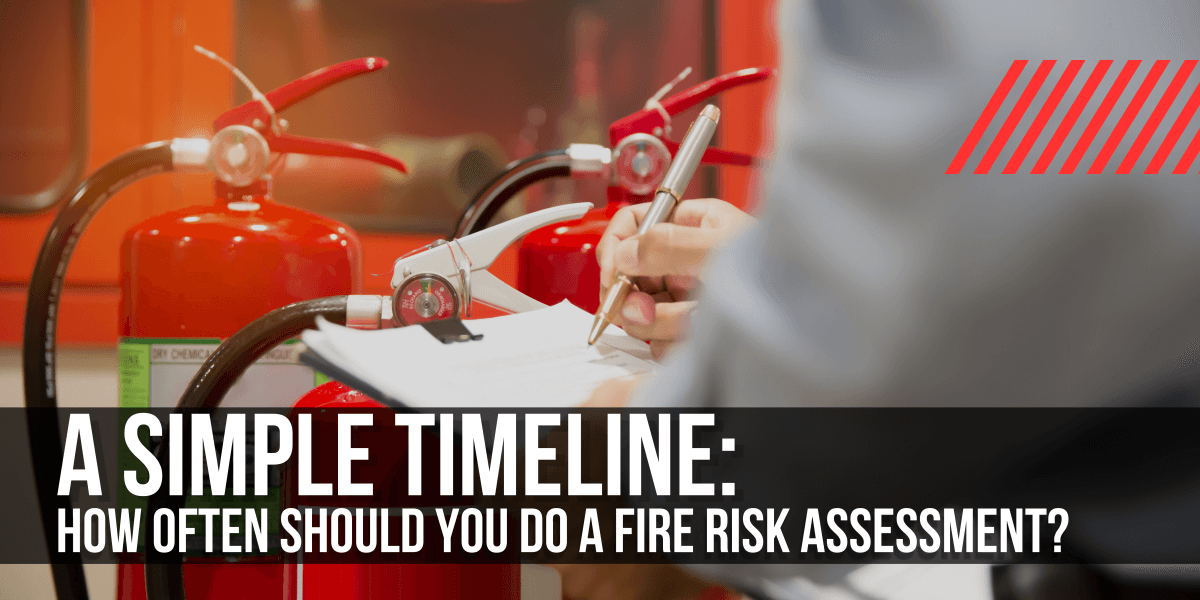
As best practice, fire risk assessments should be formally reviewed at least once every 12 months. An annual review helps confirm that fire safety measures are still suitable and that no significant changes have been overlooked.
For higher-risk premises, such as industrial sites, care homes, or buildings with high occupancy, more frequent reviews may be necessary. Low-risk environments may require less frequent formal reviews, but ongoing monitoring is still essential.
Reviewing Fire Risk Assessments After Significant Changes
Fire risk assessments must be reviewed immediately after any significant change to the premises or activities. Examples include building extensions, internal layout changes, installation of new machinery, or changes in the type or quantity of flammable materials.
Changes in occupancy levels, work patterns, or staffing arrangements also require review. Even temporary changes, such as refurbishment work or short-term storage of flammable materials, can affect fire risk and should trigger a reassessment.
Reviewing Fire Risk Assessments After Fire Incidents or Near Misses
Any fire incident, no matter how small, is a clear sign that the fire risk assessment should be reviewed. Near misses, such as small electrical fires or overheating equipment, also indicate potential weaknesses in fire safety measures.
Reviewing the assessment after incidents helps identify failures, improve controls, and prevent future occurrences. Lessons learned from incidents should be incorporated into updated fire safety procedures.
Ongoing Monitoring Between Formal Reviews
In addition to formal reviews, fire risk assessments require ongoing monitoring. Regular workplace inspections, maintenance checks, and staff feedback help identify emerging risks early.
Fire wardens or safety officers should report issues such as blocked escape routes, faulty alarms, or poor housekeeping. These observations support continuous improvement and reduce reliance on annual reviews alone.
See also: Top Cybersecurity Threats Businesses Face in 2025
Documentation and Record Keeping of Reviews
Documenting fire risk assessment reviews is essential for demonstrating compliance. Records should include review dates, findings, changes made, and actions required.
Maintaining accurate records helps track improvements over time and provides evidence during inspections by fire authorities or insurers.
Who Should Carry Out the Review?
Fire risk assessment reviews should be conducted by a competent person with knowledge of fire safety and the specific premises. This may be an internal safety manager or an external fire safety professional, depending on the complexity of the risks involved.
Competent reviews ensure that changes are identified accurately and appropriate control measures are implemented.
Conclusion
Fire risk assessments should be reviewed regularly to remain effective and legally compliant. Annual reviews, combined with immediate reassessments after significant changes or incidents, represent best practice. Ongoing monitoring, proper documentation, and competent oversight ensure that fire risk assessments continue to protect people, property, and business operations over time.
